
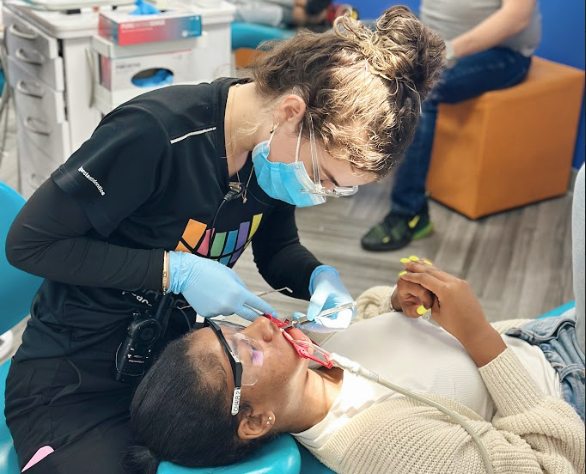
What Is Invisalign and How Long Does Treatment Typically Take?
Invisalign is a clear aligner system that gradually shifts teeth into proper alignment using custom-made, removable plastic trays. Most patients complete Invisalign treatment in 6 to 18 months, though your specific timeline depends on case complexity, how consistently you wear your aligners, and your individual biology.
Knowing what affects treatment time helps you plan ahead and avoid surprises. Garcia Orthodontics uses iTero digital scanning technology to map out your full treatment before you even start, so you understand your projected timeline from day one.
For mild cases like minor spacing or slight crowding, treatment can wrap up in as few as 3 to 6 months. Moderate alignment issues take 12 to 18 months, while more complex cases involving significant bite corrections may extend to 18 to 24 months. You’ll see noticeable changes within the first few months, which keeps most patients motivated throughout their treatment.
What makes Invisalign different from traditional braces is the level of predictability. Your orthodontist creates a digital treatment plan that shows exactly how your teeth will move and approximately when you’ll finish. This isn’t guesswork. It’s precision planning based on your unique dental anatomy.
How Invisalign Works: A Month-by-Month Timeline
Invisalign uses a series of custom 3D-printed clear aligners that apply gentle, controlled pressure to shift teeth incrementally. Each set is worn for one to two weeks before switching to the next, and the cumulative effect produces significant movement.
Your Consult and Treatment Planning (Month 0)
Your treatment starts with a consult where your orthodontist evaluates your teeth, bite, and overall oral health. Using digital scanning technology, the team captures detailed 3D images of your mouth without messy impressions. This scan becomes the basis for your custom treatment plan, which maps out every stage of tooth movement from start to finish.
Month 1: Getting Used to Your Aligners
When you receive your first set of aligners, you’ll feel some pressure as your teeth begin adjusting. That’s normal, and it actually means the aligners are working. Most patients adapt within the first week or two. You’ll need to wear your aligners 20 to 22 hours daily, removing them only for eating, drinking anything other than water, and brushing your teeth.
Months 2 to 3: Visible Changes Start
By month two or three, the visual payoff kicks in. Minor crowding starts to improve, and gaps begin closing. You’re switching to new aligner trays every one to two weeks, and each swap brings your teeth closer to their final positions. Many patients notice their smile looking straighter already, which keeps you on track heading into mid-treatment.
What Does Mid-Treatment Look Like? (Months 4 to 6)
By now, you’ve built a solid routine. Your orthodontist at Garcia Orthodontics will schedule check-ins to monitor progress and make any necessary adjustments to your treatment plan. Some patients receive refinement aligners at this stage if certain teeth need extra attention. Others are cruising along right on schedule. Every case is different, and that’s completely expected.
The Final Correction Phase (Months 7 to 12 and Beyond)
The later stages focus on fine-tuning, and this is where patience really pays off. Perfecting tooth positions, adjusting your bite, making sure everything aligns properly. Finishing trays address the remaining details that make the difference between good results and great ones. Once active treatment ends, you’ll transition to retainers to maintain your results.
What Are the Benefits of Knowing Your Invisalign Timeline?
Walking into treatment with clear expectations makes a real difference. Here’s why understanding your timeline matters, broken into two key areas.
How Does a Clear Timeline Help You Plan?
- You can plan around life events. Whether it’s a wedding, graduation, or job interview, knowing your projected end date helps you coordinate important moments with your smile goals.
- Fewer visits fit busy schedules. Unlike traditional braces that require frequent wire adjustments, Invisalign check-ins are spaced further apart. Most patients visit their orthodontist every 6 to 8 weeks, which means less time away from work or school.
- Seeing your teeth shift within the first few months reinforces that the process is working. That kind of visible progress carries you through to the end, even when the daily routine starts to feel repetitive.
Why Does Digital Planning and Aligner Design Make a Difference?
- Preview your results before treatment begins. Your orthodontist can show you a simulation of your final results, which keeps you motivated when the daily routine feels tedious.
- Easier oral hygiene with removable aligners. You brush and floss normally because the trays come out. That reduces the risk of cavities or gum issues that could delay treatment. No special tools needed, no extra steps.
Invisalign vs. Braces: How Do Treatment Timelines Compare?
Choosing between Invisalign and traditional braces often comes down to lifestyle preferences and case complexity. But treatment time matters too. At Garcia Orthodontics, our orthodontists offer both treatment solutions, so here’s how they stack up:
| Case TypeCase Type | Invisalign Timeline | Traditional Braces Timeline |
|---|---|---|
| Mild (minor spacing, slight crowding) | 3 to 6 months | 6 to 12 months |
| Moderate (crowding, gaps, minor bite issues) | 12 to 18 months | 12 to 18 months |
| Complex (severe crowding, significant bite correction) | 18 to 24 months | 18 to 24 months |
For mild to moderate cases, Invisalign often finishes faster because the digital planning allows for precise, efficient tooth movement. Traditional braces may have an edge for certain complex bite issues that require more mechanical control.
The biggest difference? Compliance. Braces work around the clock because they’re attached to your teeth. Invisalign only works if you wear the aligners consistently. Skip hours here and there, and your treatment extends. It’s that simple.
Both treatment methods produce excellent results when patients follow their orthodontist’s instructions. The “best” option depends on your specific needs, which is why a consult matters. Our orthodontists can recommend whichever treatment solution best fits your case.
Factors That Affect How Long Your Invisalign Treatment Takes
Five main factors determine your Invisalign timeline: case complexity, patient compliance, age and biology, mid-course refinements, and the retainer phase. One person finishes in 8 months while another takes 16, and the reasons come down to individual circumstances. Your orthodontist can explain which factors apply to your case during your consult.
How Does Case Complexity Affect Your Timeline?
No single factor matters more than this one. Mild crowding or small gaps resolve quickly, often in 3 to 6 months. Moderate issues like overlapping teeth or bite discrepancies need 12 to 18 months. Severe cases involving significant rotation, deep bites, or complex spacing can extend to 18 to 24 months. The initial digital scan gives your orthodontist a precise read on where your case falls.
Does Patient Compliance Change Treatment Length?
Absolutely. Invisalign aligners must be worn 20 to 22 hours daily to work as planned. Every hour you skip adds up. That matters more than most patients realize. Consistently removing aligners for longer than recommended can add weeks or even months to your treatment, and your orthodontist designs your plan assuming full compliance.
How Do Age and Biology Play a Role?
Teeth don’t move at the same rate for everyone. Teens often experience faster movement because their jaws are still developing. Adults can absolutely achieve great results, but the process may take slightly longer depending on bone density and overall oral health. Neither age group is at a disadvantage, though. The treatment plan accounts for these biological differences from the start.
What About Refinements and the Retainer Phase?
Sometimes teeth don’t track exactly as predicted. When this happens, your orthodontist may order additional aligner sets called refinements. These add 2 to 4 months but ensure your final results meet expectations. Once your teeth reach their final positions, you’ll wear retainers to prevent them from shifting back. This maintenance phase is essential for long-term success and lasts indefinitely, though wearing requirements decrease over time.
Who Is a Good Candidate for Invisalign, and Who May Need Longer Treatment?
Invisalign works well for many patients, but it’s not the right fit for everyone. Here’s how to gauge whether you’re a good candidate:
Ideal candidates include:
- Adults and teens with mild to moderate crowding or spacing
- Patients with minor bite issues like slight overbites or underbites
- People who can commit to wearing aligners consistently throughout the day
- Those who want a less visible treatment solution
Longer treatment or alternative approaches may be needed for:
- Severe crowding requiring significant tooth movement
- Complex bite problems like deep overbites, crossbites, or skeletal issues
- Cases requiring tooth extraction as part of the treatment plan
- Patients who struggle with compliance or frequently forget to wear aligners
For teens, Invisalign offers special features like compliance indicators built into the aligners. These small blue dots fade with wear, helping parents and orthodontists track whether the aligners are being worn enough.
The only way to know your specific timeline and candidacy is through a consult with an orthodontist. Our team at Garcia Orthodontics evaluates each patient individually to recommend the most effective treatment approach.
Frequently Asked Questions About Invisalign Treatment Time
Can Invisalign work in 6 months?
Yes, but only for very mild cases. If you have minor spacing between teeth or slight crowding that doesn’t involve bite correction, you may finish in 6 months or less. Your orthodontist can tell you during your consult whether a shorter timeline is realistic.
Does Invisalign take longer for adults?
Adults may experience slightly longer treatment times than teens because adult bone is denser and teeth move more gradually. That said, most adults complete Invisalign in 12 to 18 months. Age alone doesn’t disqualify you, and adults consistently see excellent results within that timeframe.
What happens if I don’t wear my aligners enough?
Your treatment will take longer. There’s no way around it. Aligners need consistent pressure to move teeth on schedule. If you regularly wear them less than 20 hours daily, your teeth won’t track properly with each new tray. This can require additional refinement aligners and extend your overall timeline by months.
How often do I switch Invisalign trays?
Most patients switch to a new set of aligners every one to two weeks, depending on their orthodontist’s recommendations. Each tray makes small adjustments, and the cumulative effect over time creates significant movement. Your treatment plan specifies exactly when to change trays.
Is Invisalign faster than braces?
It depends on the case. For mild to moderate cases, Invisalign often finishes faster due to precise digital planning and efficient tooth movement. Complex cases may take similar time with either method, or braces might be faster if significant mechanical control is needed. The best way to find out which treatment solution works for your timeline is to schedule a consult with an orthodontist who offers both.
Does a longer Invisalign timeline cost more?
In many cases, yes. Longer treatment requires more aligner sets, more check-in appointments, and more orthodontist oversight, all of which factor into the total investment. Mild cases that wrap up in a few months generally cost less than complex cases lasting 18 months or more. That said, the value of your treatment depends on the results you’re working toward, not just the number of months. During your consult, your orthodontist can walk you through what your specific case will involve and what the investment looks like. Many practices, including Garcia Orthodontics, offer flexible financing to help make treatment accessible regardless of timeline length.
Want to find out how long your Invisalign treatment might take? Schedule a consult to learn what timeline works for your specific case and what your treatment will actually involve. You’ll walk away knowing your treatment plan, your projected finish date, and what to expect throughout the process.